The Dilute Gene and the Cost of Looking the Other Way
For most of the Labrador’s history, the dilute gene wasn’t part of the breed. You won’t find it in the early pedigrees or in the foundation dogs imported from Newfoundland or England. It appeared much later, starting here in the United States and not by accident. Somewhere along the way, the gene entered the breed quietly, through decisions made by people willing to bend the rules for something new to sell. Some believe it was deliberate crossbreeding with Weimaraners trying to create pointing Labradors. Others say a handful of kennels held the secret long enough for it to settle into the population unnoticed. The stories differ, but the conclusion doesn’t. Dilute didn’t come from the Labrador origins. It was introduced.
Once it appeared, the marketing followed. Buyers were told silvers were rare, that they came from old English lines, that the color had simply “skipped generations.” None of it was true, but AKC paperwork made everything feel official. The registry accepts forms, not evidence. And as long as the boxes were filled out correctly, dilute dogs entered the system the same way purebred Labradors did. Over time, those registrations became part of the public belief that “if AKC allows it, it must be legitimate.”
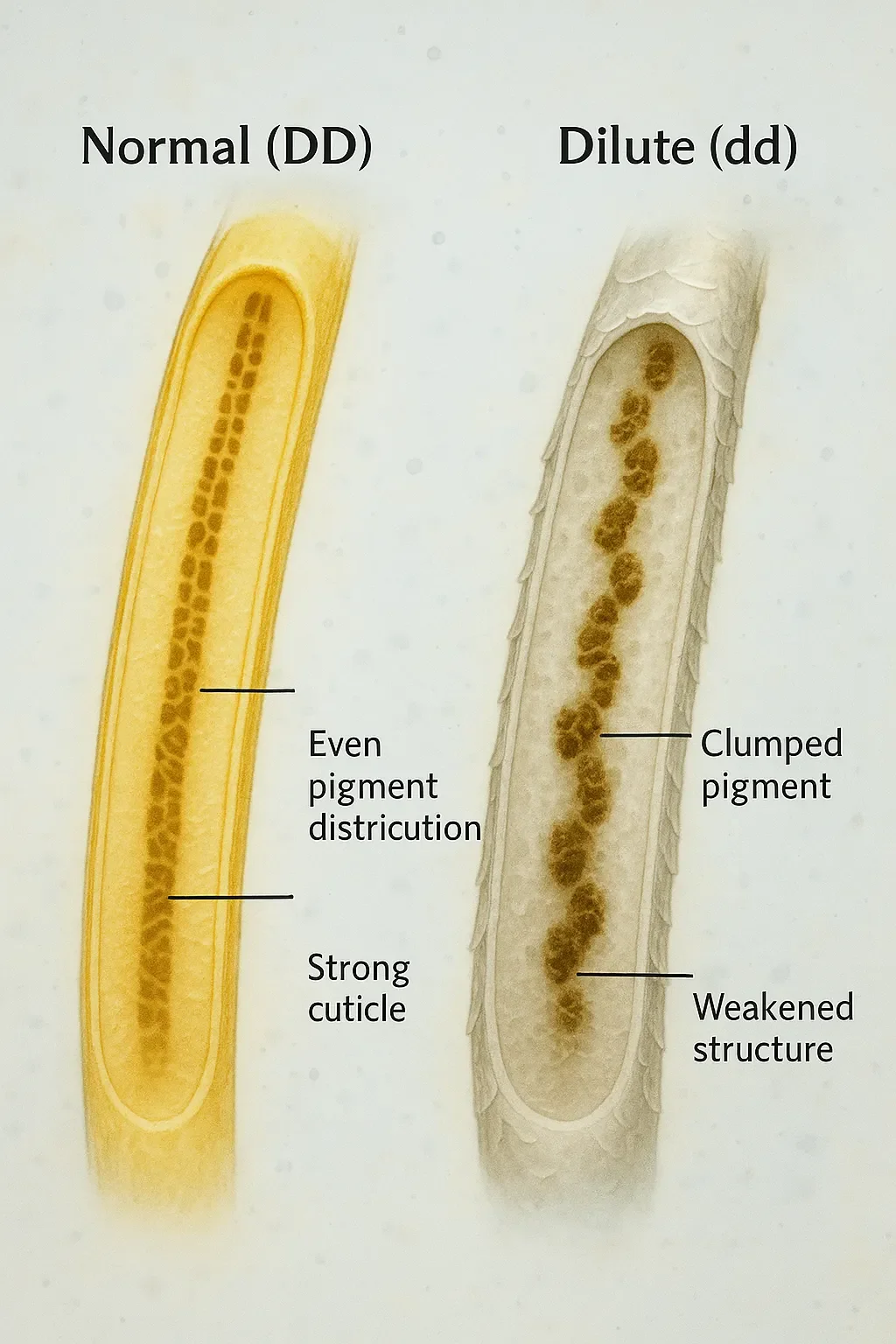
Now the real issue here is that pigment doesn’t affect just color. Inside a normal Labrador hair shaft, pigment granules help stabilize the way the hair forms. When the granules are evenly distributed, the hair grows in a strong, cylindrical shape with a smooth and intact cuticle. That structure is what allows each hair to resist breakage, maintain density, and interlock with the undercoat. Together, these traits create the weatherproof double coat that lets a Labrador move in and out of cold water without losing heat,
This is why dilution affects more than appearance. A Labrador’s entire working purpose depends on coat integrity, and pigment distribution is a key part of that integrity. When the pigment pathways are altered, the coat loses both function and weather resistance, which are defining features of the breed.
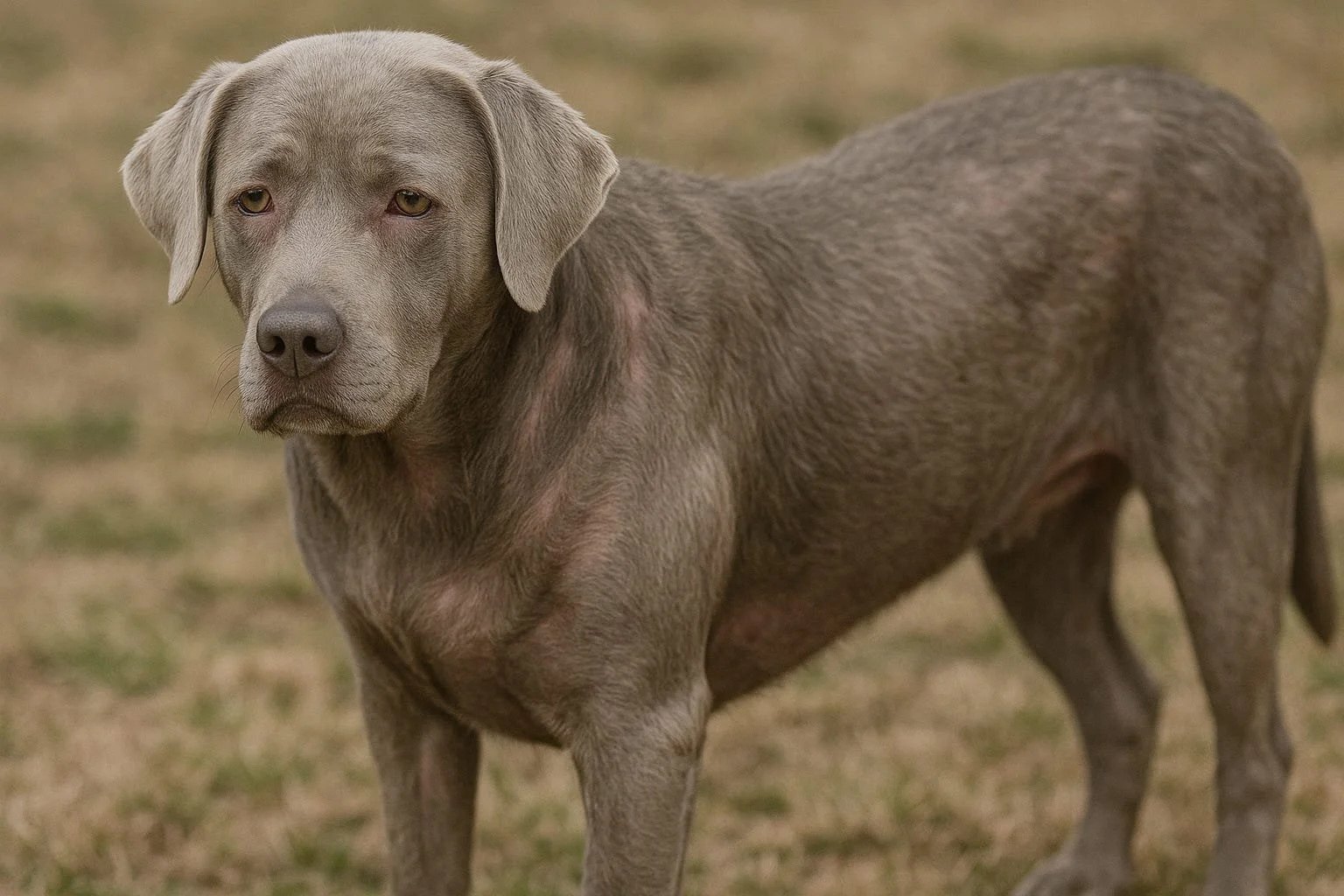
The skin underneath absorbs the rest of the impact. Pigment pathways influence barrier strength and immune response, so when pigment movement is disrupted, the skin becomes more vulnerable. Many dilute dogs cycle through chronic yeast infections, bacterial overgrowth, slow-healing irritation, and inflammation that returns seasonally or with stress. In some cases, the dog progresses into color dilution alopecia, a condition where follicles weaken permanently and hair loss becomes irreversible. This combination of coat and skin issues is fundamentally incompatible with the Labrador’s purpose. A compromised double coat cannot regulate temperature, dry properly, or withstand the demands the breed was designed for breeds that naturally carry dilute evolved around it. Labradors did not. Introducing this gene created a biological mismatch the dog cannot hide or overcome, no matter how much marketing surrounds it.
This is where the role of AKC becomes impossible to ignore. It isn’t that AKC set out to promote dilute. It’s that AKC has never prioritized preservation or health. It is obvious their goal, as they’ve consistently demonstrated, is to simply register dogs and put on more and more dog shows. Their system relies on breeder “honesty,” not verification. Registrations generate revenue, and the system is designed to keep the paperwork flowing, not to enforce genetic or health integrity. That approach explains how the dilute gene slipped into the registry unchallenged. It explains why falsified pedigrees were accepted. And it explains why the registry allowed nearly forty years of dilute dogs to be recorded as chocolates without accountability.
The recent LRC statements make it clear that the board’s hands were tied long before the announcement went public. Forty years of effort, and the AKC still moved forward on its own terms. That reality changes how we respond. This is not the moment to turn on the board. They have been doing everything possible inside the limits of a system that doesn’t value preservation as much as it values registrations.
If we want to protect this breed, it has to start within the community itself. We cannot expect AKC to course-correct on our behalf. They have shown us, repeatedly, that their priority is registry function, not breed integrity. The LRC cannot fight this alone. What happens next depends on breeders choosing to fight for their standard, educate buyers, test when necessary, and refuse to normalize a gene that was introduced through misrepresentation.
This is a hard pill to swallow, but it may be the one that finally pushes us to act. The LRC now has an opportunity to look at the evidence and decide how to address it going forward. If AKC wanted to fix this, the steps were not complicated. They could have required DNA checks for lines tied to dilute. They could have stopped registering dilute-producing dogs as purebred Labradors. Any of those decisions would have slowed the spread and protected the integrity of the registry and our breed.
And if they wanted to go even further, they already have the most obvious option on the table backed by the LRC: create a separate breed. They could establish something like the “American Silver Retriever” and funnel all dilute dogs into that registry. New breed, new fees, new marketing angle. It would give them a profitable place to put the dogs while removing them from the Labrador gene pool that they don’t belong in. It’s an extreme solution, but it’s simple, clean, and completely in line with how AKC has handled other off-standard populations in the past. Plus it creates more revenue for them.